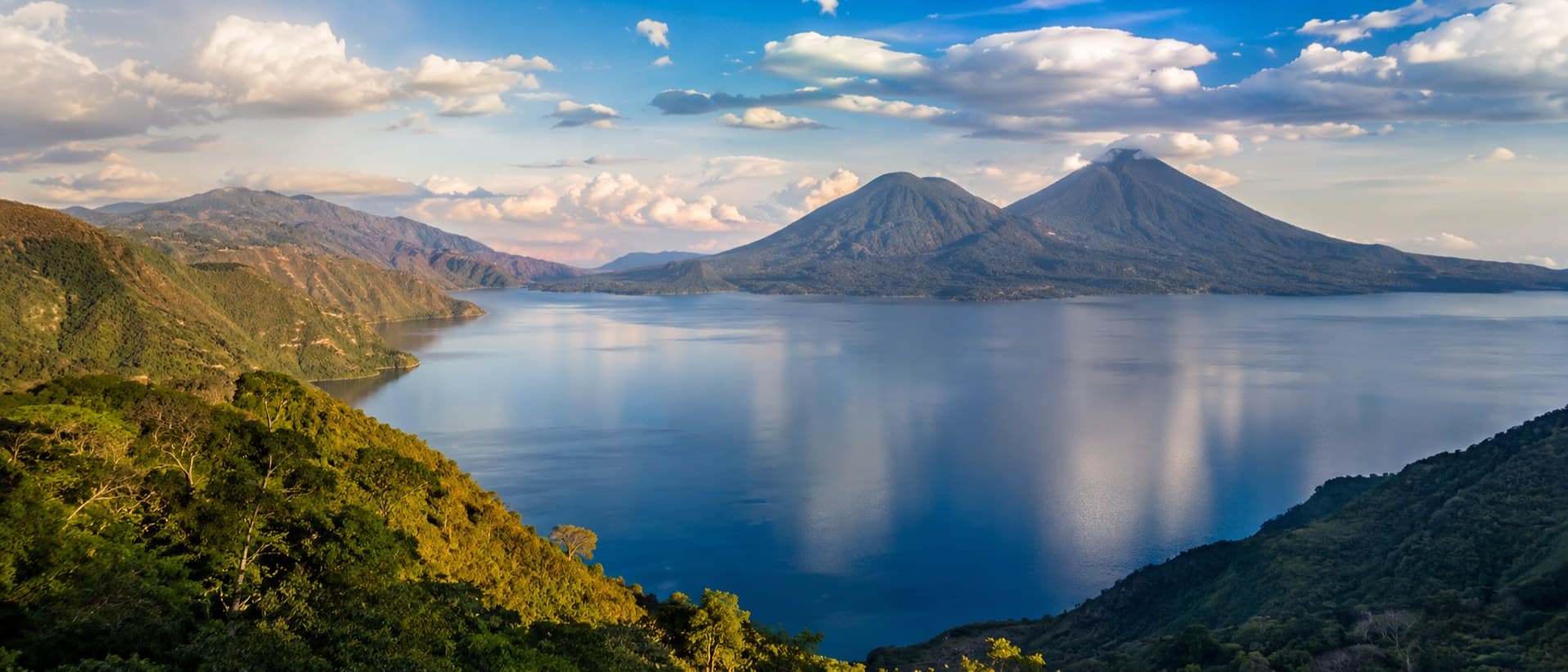
We’re saving Lake Atitlán from the land up. Not by draining it — by healing it.
Lake Atitlán is threatened by what flows down into it: sewage, farm run-off, eroded soil. There’s a plan to fix it by pumping billions of litres out to a treatment plant. We think there’s a better way — and we’re already building it, from the watershed up, with two municipalities and the communities who live here.
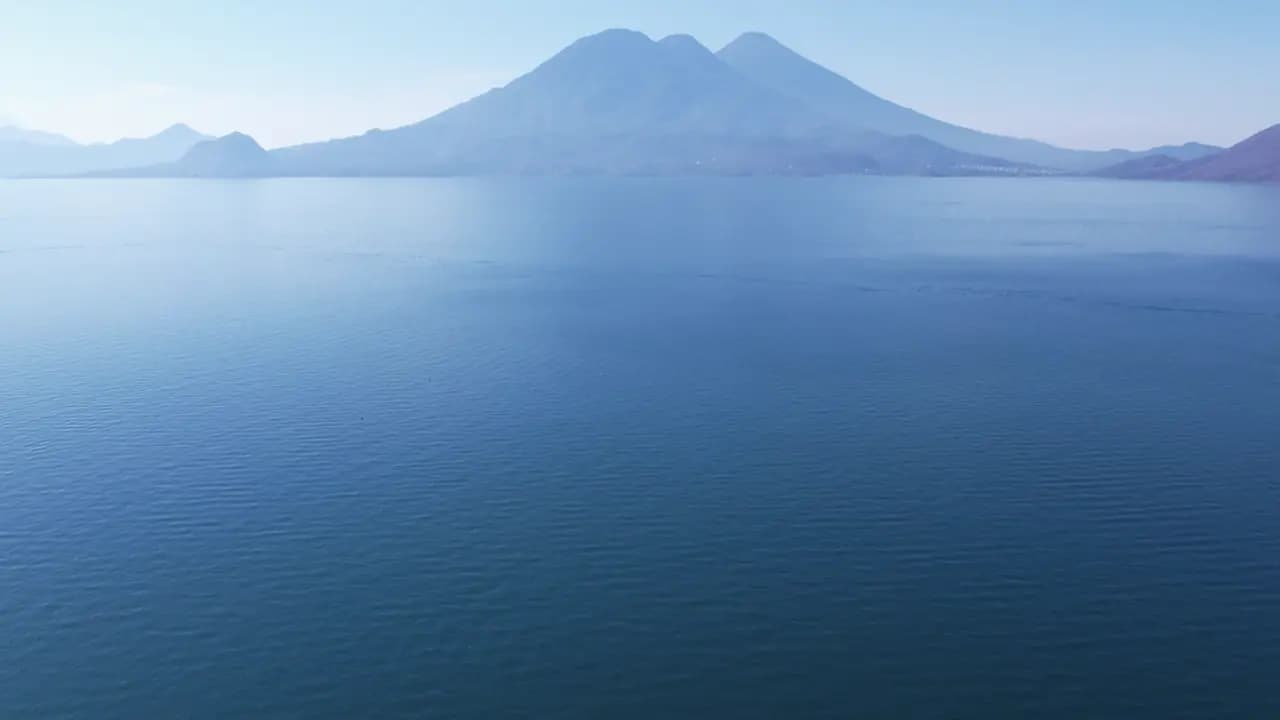
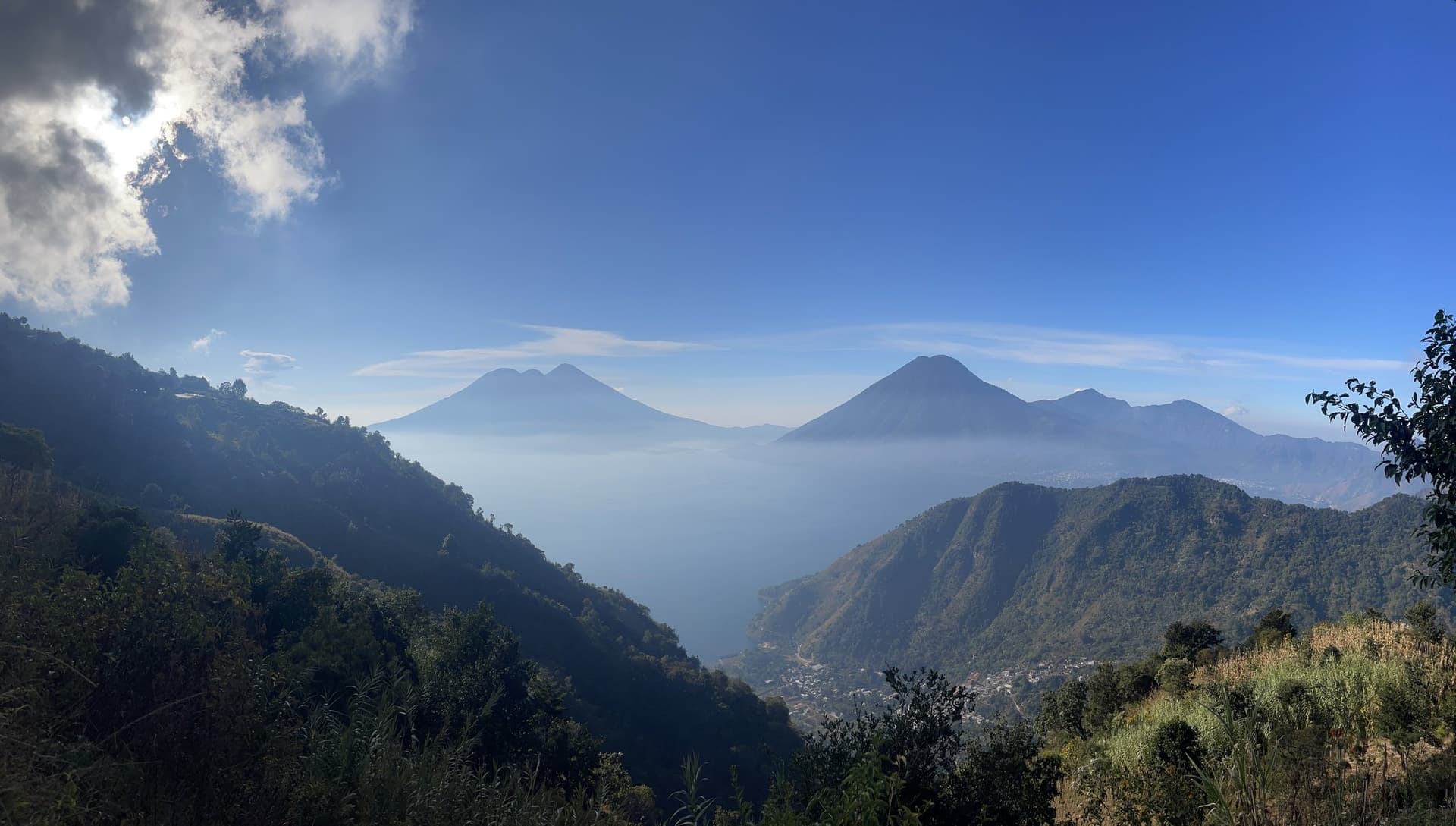
A lake in a bowl of volcanoes
Everything on those slopes — every drop of rain, every ounce of soil, every drain from every town — flows downhill and ends up in the water. That’s what makes it beautiful. It’s also what’s killing it.
For years the lake has suffered blooms of cyanobacteria, fed by sewage and farm chemicals washing down from the watershed. At their worst, they’ve turned huge stretches of water a sickly green.
Here’s the part that matters. The lake isn’t dying because the problem is unsolvable. It’s suffering because almost everything that reaches it comes down from the land, untreated and uncaught. And land is exactly what we know how to fix.
Runoff
Sewage, farm chemicals and eroded soil wash down the slopes and end up in the water.
Algae blooms
Those nutrients feed cyanobacteria that have turned huge stretches of the lake a sickly green.
Broken cycles
Water tears off the land instead of soaking in — drought above, flooding below.
Lost livelihoods
Fishermen catch less. Families who once drank straight from the lake no longer can.
There’s a plan to save the lake. We think there’s a better one.
The main proposal on the table is enormous and expensive: pump billions of litres of the lake’s water out to a distant treatment plant, clean it, and pipe it back. Take the problem away from the lake and solve it somewhere else.
We think that’s backwards. You don’t heal a lake by draining it. You heal it by stopping the harm before it ever arrives — up on the land where it starts.
It’s cheaper, it lasts, and it makes the whole watershed healthier instead of just treating the symptom. It’s also harder, because it means working with dozens of towns and hundreds of landowners instead of building one big machine. So we started.
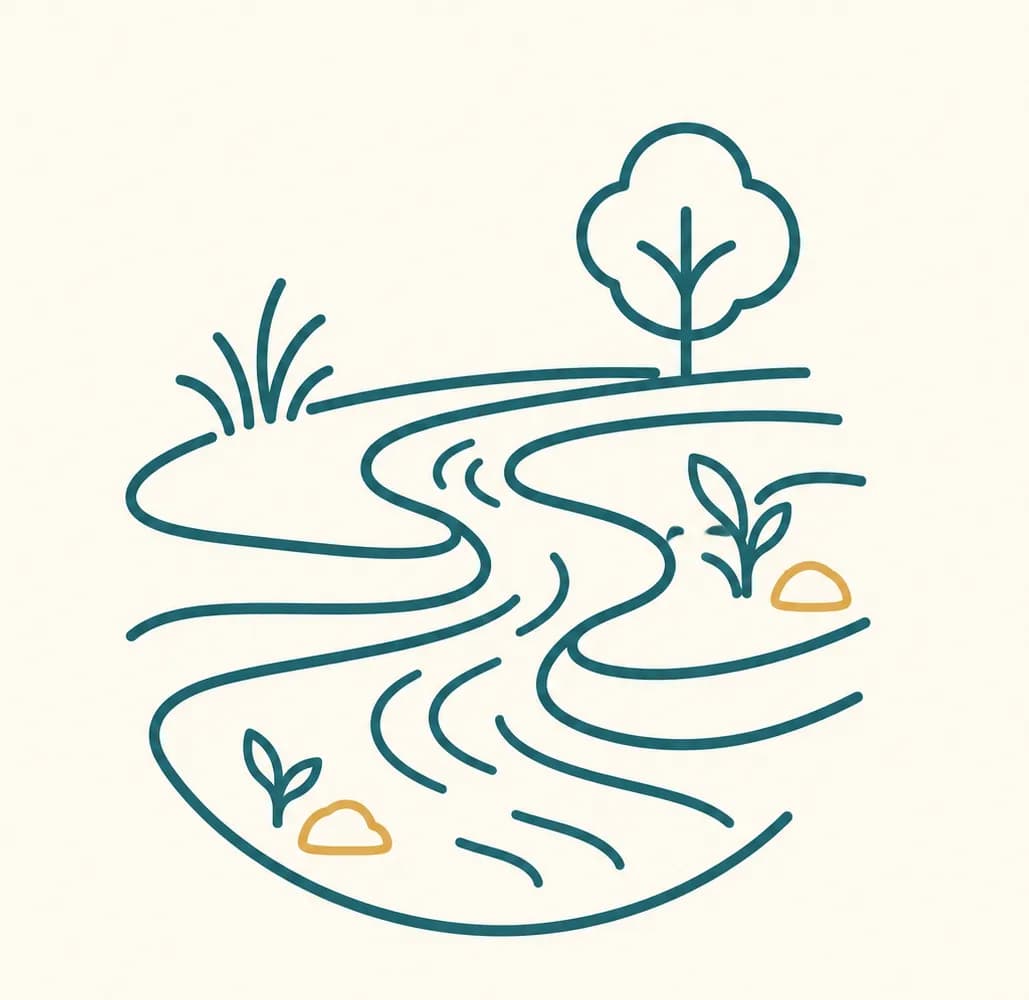
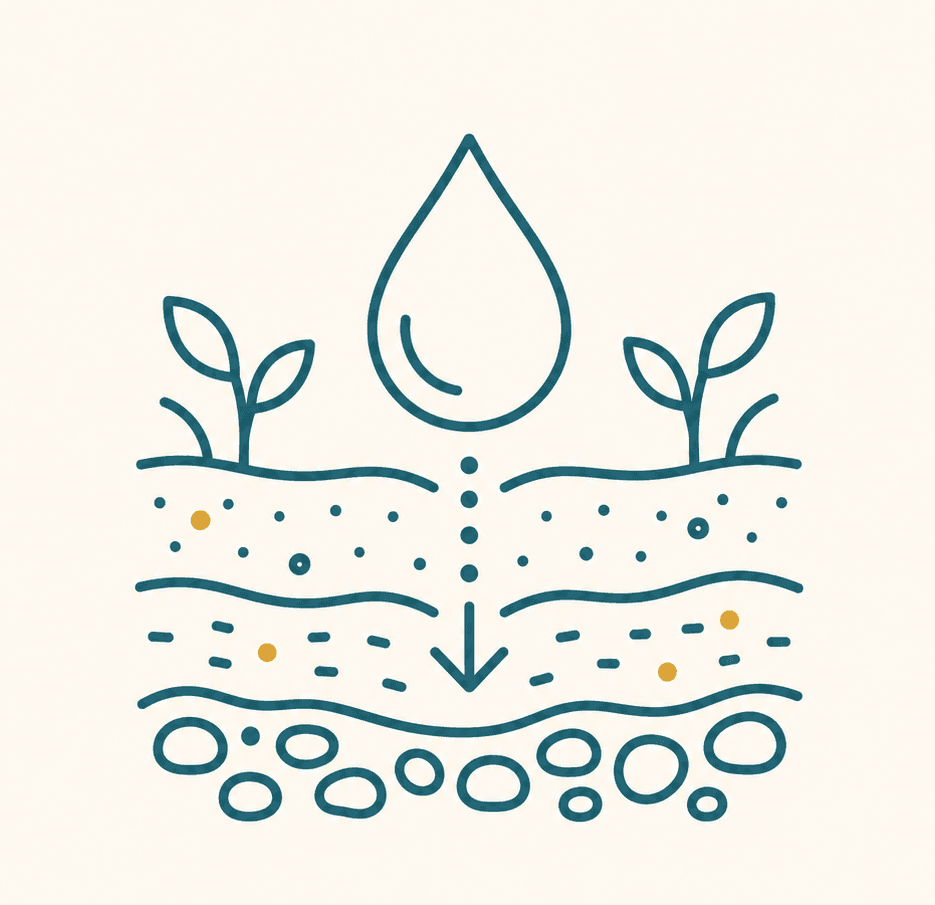
Slow the water
So it sinks into the ground instead of tearing soil loose on the way down.
Catch dirty water
And turn it into a resource on the land before it ever reaches the shore.
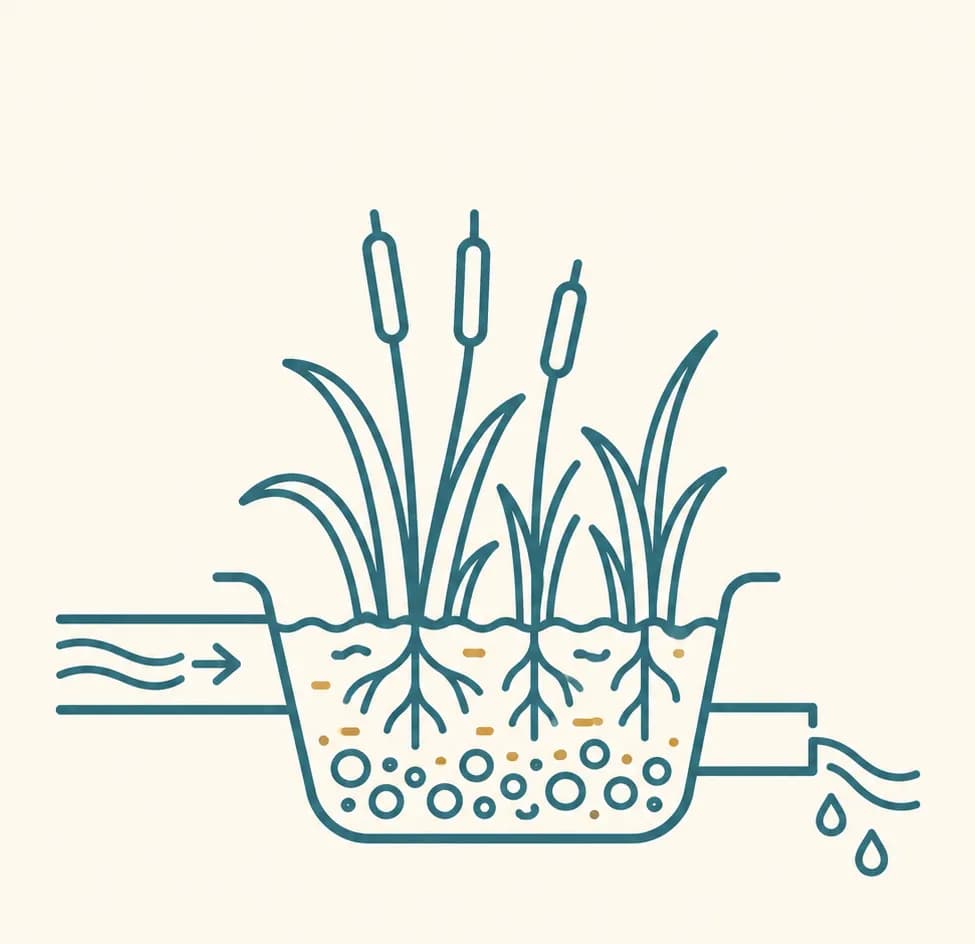
Build wetlands
Living systems that filter what does get through, before it hits the lake.

Farm without chemicals
Help farmers grow food without the inputs that end up in the water.
This isn’t a proposal. It’s already in the ground.
Every system we’re scaling has already been trialled at small scale, and works. That’s the difference between a good idea and a plan.
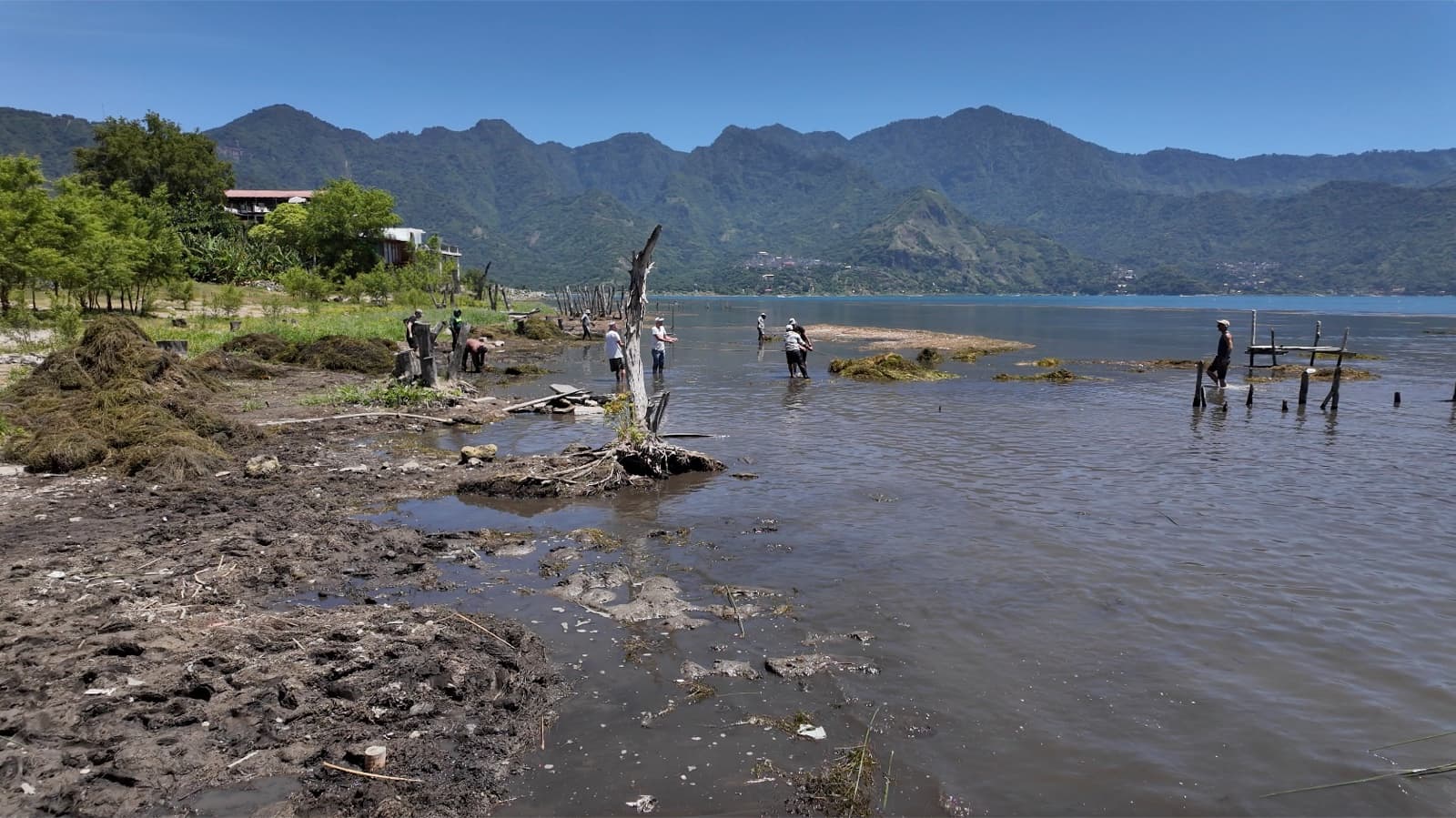
A productive wetland for San Pedro la Laguna
The municipality approved our design to turn a stretch of their beach into a beautiful, productive wetland that will filter roughly 40 million litres of water before it reaches the lake. We’re building the first section now — 140 metres long, about 20 wide — and they’re open to us restoring their entire 7km shoreline the same way. Solve it here, and you’ve got a model that works everywhere.
See the full plan, budget and route of the water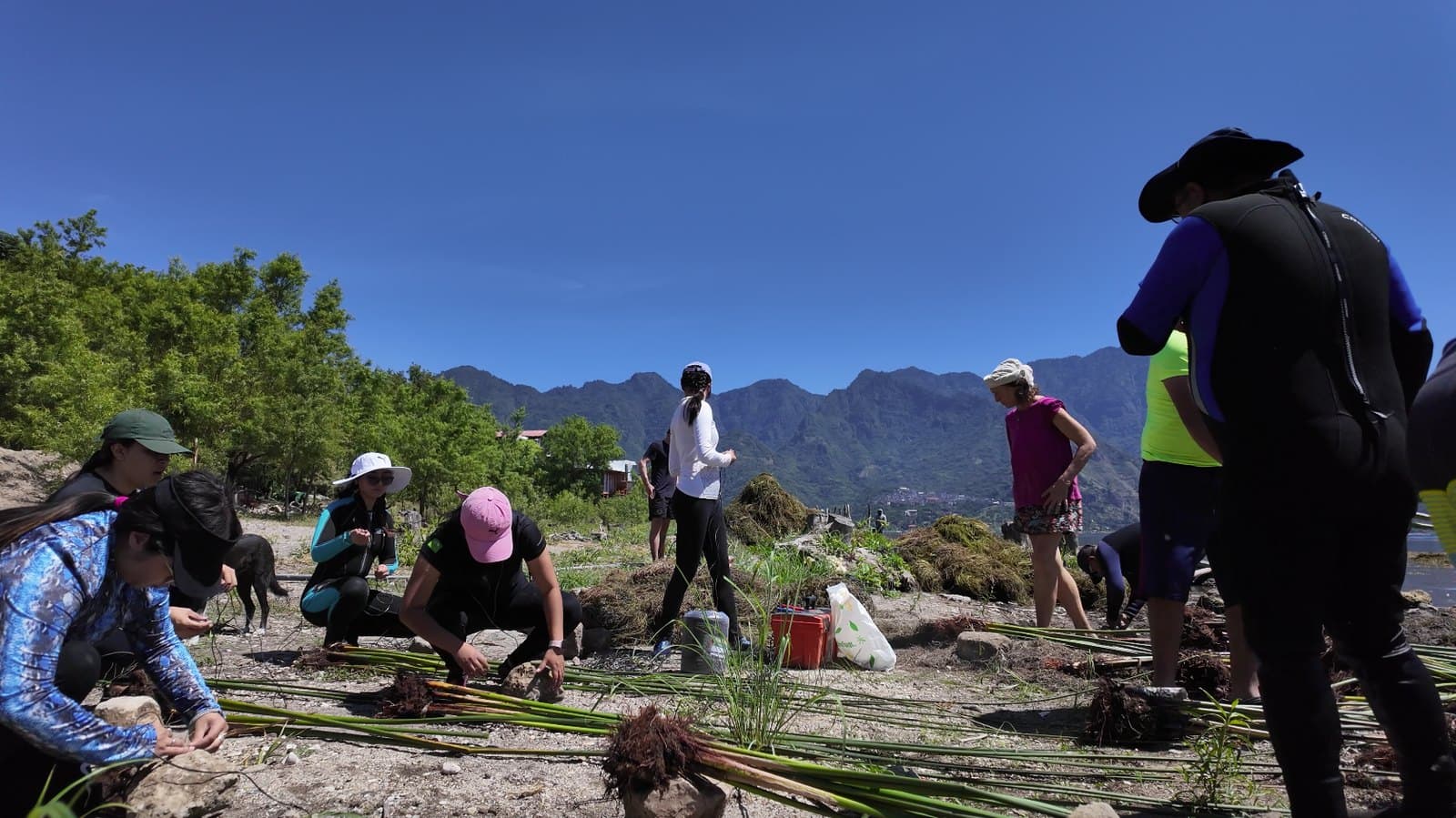
Working With Landowners and Municipalities
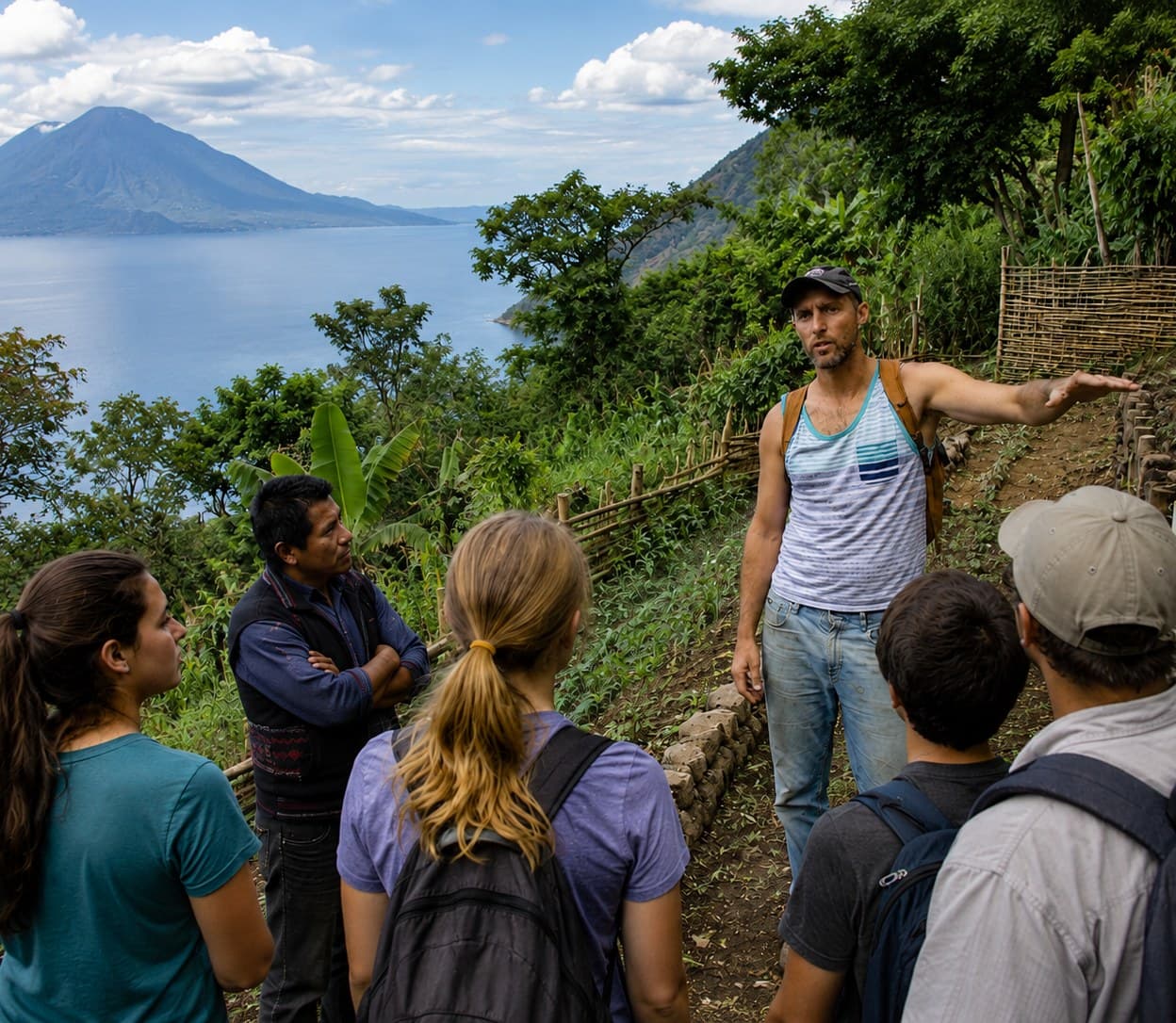
Turning dirty water into a resource on their own land — we build settling tanks and route the water into French drains, so what used to run off as pollution soaks in and feeds the ground. Some are done, some are underway. This is the hands-on work volunteers come to help build and maintain.
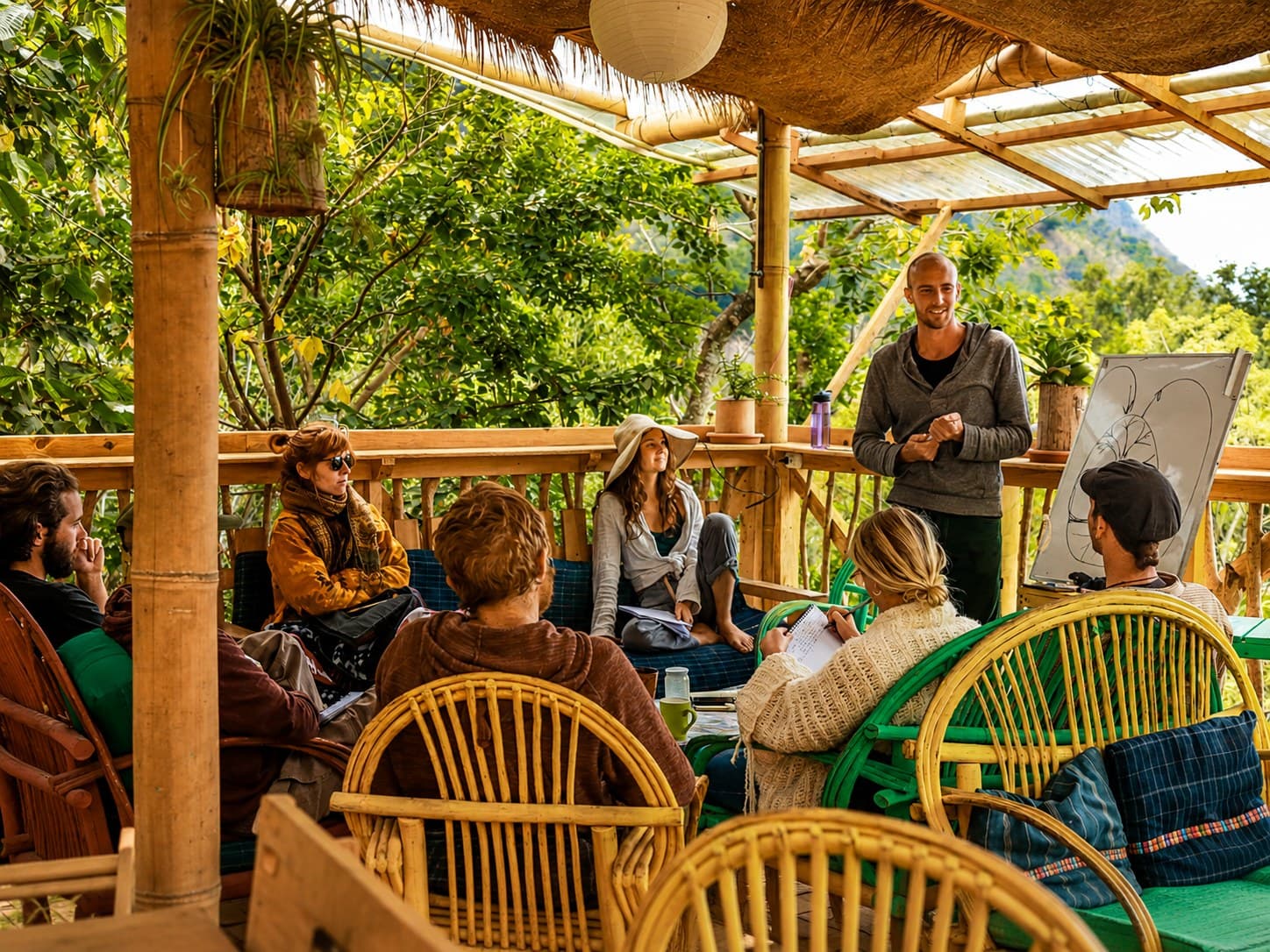
Training People to Restore Land and Water Systems
We teach people how to restore soil, water, ecosystems, and communities through real-world design.
Two municipalities have bought in. Every system we’re scaling already works.
A watershed can’t be healed by one group
When two municipalities and the country’s environmental authorities are at the table, this stops being a nice idea and starts being a movement with roots.
We’re setting a new standard others can copy
Every project we build does two things at once. It heals a piece of the watershed, and it shows the next town, the next landowner, the next municipality that there’s a better way to do this.
We’re helping the region set a new zero-waste standard — and we’re training designers to go out and build programs like this wherever they end up: their own watershed, their own community, their own version of saving a lake.
That’s the real goal. Not just to clean this one lake, but to prove a model that spreads.
The movement
We Are Building a Network of Watershed Guardians
To save Lake Atitlán, we need trained people in every village, farm, school, municipality, and watershed.
A Watershed Guardian understands how water moves through the landscape and knows how to help restore it. They learn to read land, slow and infiltrate water, prevent erosion, reduce contamination, rebuild soil, restore ecosystems, and mobilize their communities.
The bigger vision
From One Watershed to Many
Lake Atitlán is the starting point.
The goal is not only to restore one lake.
It is to develop a living model that can be applied anywhere water cycles have been broken.
A model that regenerates land, restores water, reduces contamination, trains local leaders, and creates livelihoods around ecological restoration.
If it can work here, it can inspire restoration everywhere.
The most valuable thing you can give isn’t money
It’s attention, and belief, and helping this grow. We’re building something real — we’d rather you join us than just fund us.
Follow along
Join our list and watch it happen — real updates from the ground as the wetland takes shape and the standard spreads.
Spread the word
The more people who know this approach exists, the more pressure there is to heal the lake from the land instead of draining it. Telling one person who cares is worth more than you’d think right now.
Come to an open impact day
We run these weekly. Come see the work, get your hands in it, meet the people doing it. It’s the fastest way to understand why this matters. Join an impact day →
And if you want to give
You can — it goes straight into building and maintaining these projects. But we’re not here to pressure you for it. Donate here.
Follow the work
Join our list and watch it happen — the wetland taking shape, the landowners’ projects coming online, the standard spreading. Real updates from the ground, no spam.
There’s a plan to save this lake by taking its water away. We’re proving you can save it by healing the land it lives in — with the people who’ve always lived here.
Come be one of the people who did it the right way.