The Truth About Climate Change
by Neal Hegarty
Dec 15, 2024
The truth is, no one really knows the full truth about climate change.
Yes, we know the climate is changing—just as it always has. And we know that humans are undeniably influencing ecosystems in profound ways. But beyond that? The picture becomes less clear. The Earth is part of a vast and interconnected universe, shaped by forces that stretch far beyond our understanding.
What we do know from studying Earth’s history is this: the climate has always been in flux. From the Ice Ages to the tropical warmth of the Eocene, life has adapted and transformed through every epoch. Today, in what some scientists call the Anthropocene, humanity has become one of the most powerful forces of change.
And yet, as the dominant narratives tell us, this change is overwhelmingly destructive. But here’s where we need to pause—because that story, while true, is incomplete.
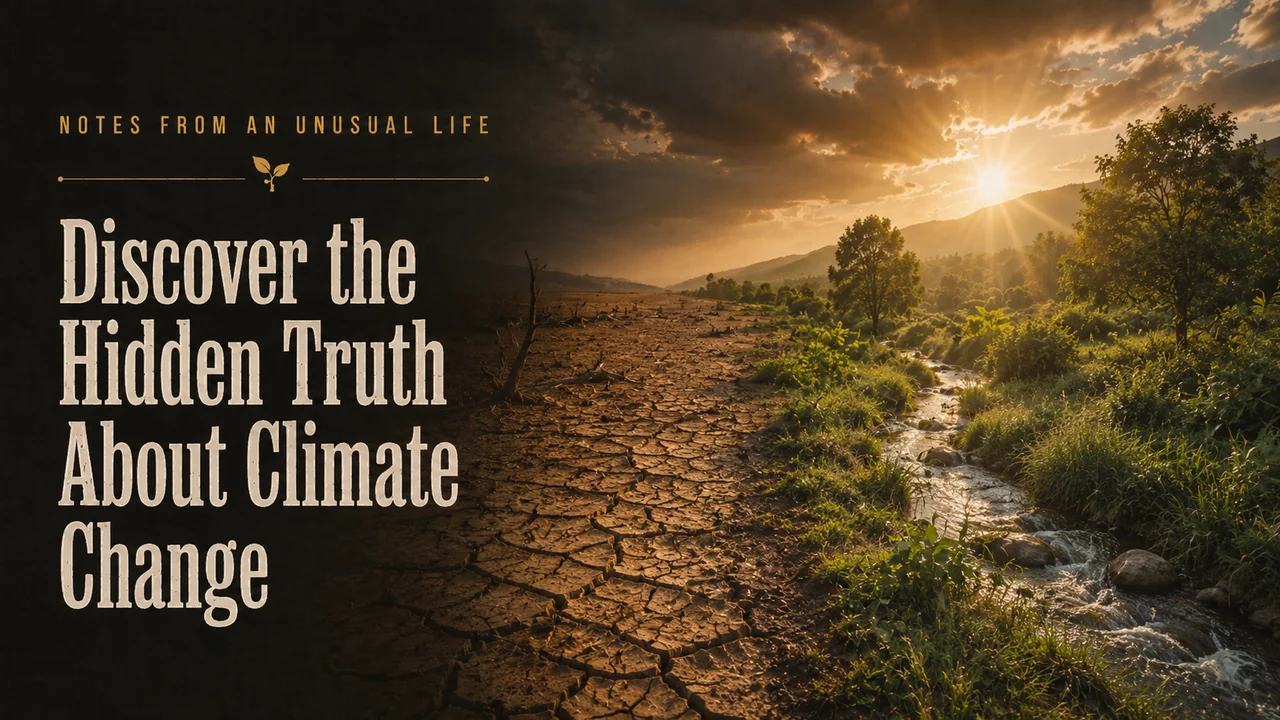
Point 1: The Myth of Human Harmfulness
Everywhere we look, we’re told humans are destroying the planet. Tiptoe around. Minimize your footprint. Reduce, reuse, recycle. These messages are rooted in the idea that humanity is inherently harmful to the environment.
But what if that story is wrong?
The notion that humans are separate from nature—and therefore destructive by default—is a myth rooted in scarcity and fear. It’s the idea that we can only “do less harm” by shrinking, consuming less, and staying out of the way.
Yet the truth is, we have the potential to be one of the most positive forces for the planet.
Imagine an ecosystem thriving because of human care—a farm that regenerates the soil, a garden that traps carbon, a community that cools the land and creates food, beauty, and abundance. The key to unlocking this potential isn’t to withdraw. It’s to reconnect. To recognize that we are part of nature, and as living beings, our purpose is to create—not consume.
Point 2: Mythology and the Flood/Dragon Archetype
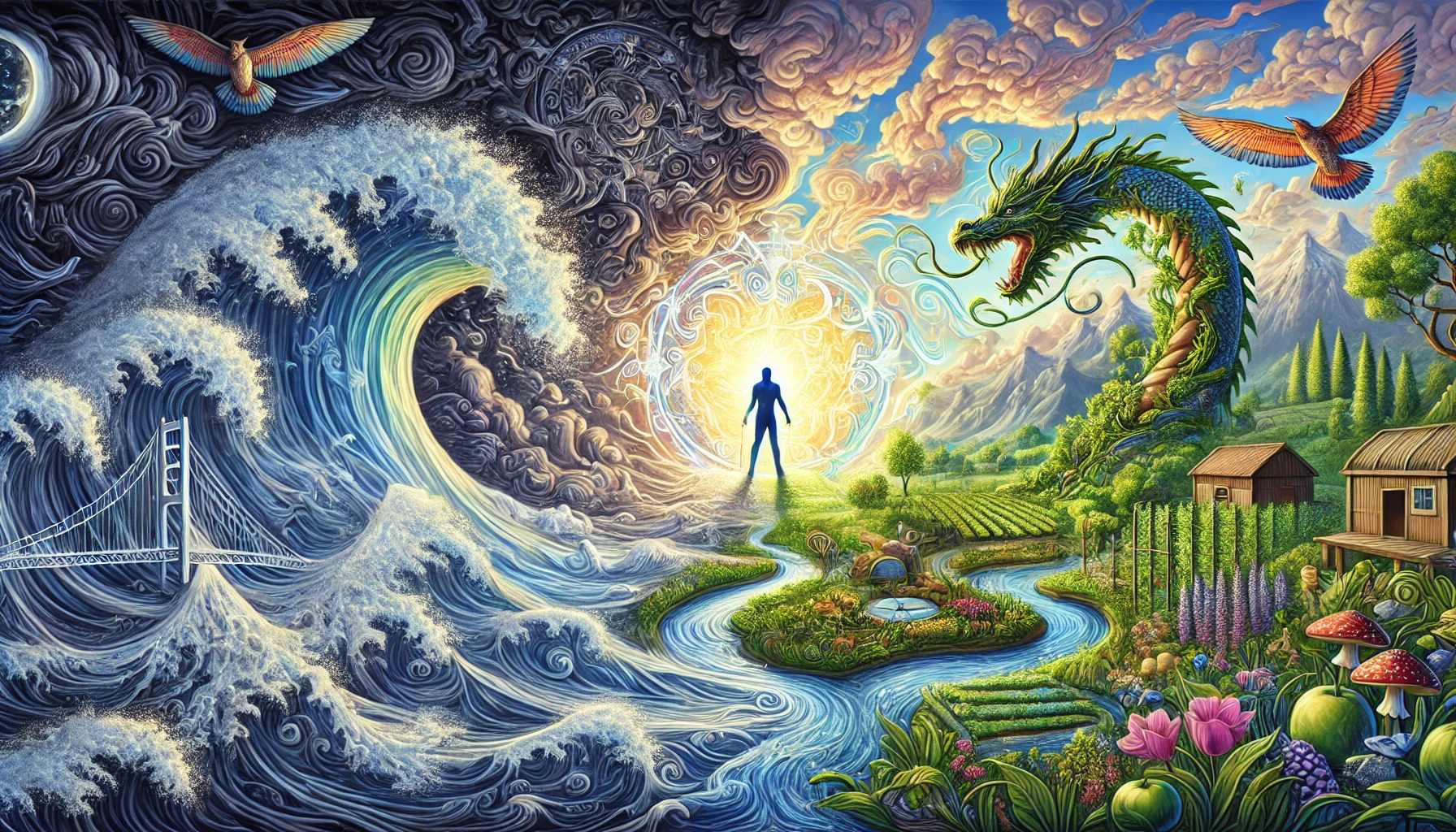
This fear of impending doom isn’t new. It’s deeply ingrained in the stories we’ve been telling for millennia. Think of the flood stories told by nearly every culture—from Noah’s Ark to ancient Mesopotamian myths. The flood represents chaos, the overwhelming force that threatens to consume us.
In mythology, floods are often paired with another archetype: the dragon. The dragon guards treasure but threatens destruction. It’s the symbol of humanity’s greatest fears—and our greatest opportunities.
In the biblical story, Noah becomes the hero, not by succumbing to fear, but by walking with God and heeding the call to act. The flood becomes his transformation, his hero’s journey.
The same is true for us. Climate change is today’s flood, today’s dragon. The chaos we face is a call to action. To embark on our hero’s journey, we must turn toward the challenge—not with fear or blame, but with bravery and purpose.
Point 3: Creativity as the Key to Healing
To face this challenge, we need more than facts or strategies. We need creativity.
Creativity is born from a place of gratitude. It’s the spark that transforms a problem into a possibility. But here’s the thing: when we’re stuck in fear, resentment, or blame, we block our creativity.
Complaining about climate change won’t solve it. Blaming corporations, governments, or past generations won’t solve it. What will solve it is shifting our energy to gratitude and excitement, knowing that the answers exist if we’re willing to look for them.
Imagine approaching the world with the mindset that every problem is an invitation to create something better. That’s where true healing begins.
Conclusion:
The Dance of Life
The truth about climate change isn’t just about entropy or destruction. It’s about the dance of life—a cycle of creation and decay that’s been happening since the dawn of time.
Look at the salmon. Against all odds, they swim upstream, bringing nutrients from the ocean back to the land. Their journey is messy, chaotic, and full of death. But in their wake, they leave a fertile, thriving ecosystem.
We’re like the salmon. We’re here to move energy upstream, to take the chaos around us and turn it into something beautiful.
Your role in this dance isn’t passive. You’re not here to consume and shrink; you’re here to create. Whether it’s building soil, planting a garden, or starting a project that regenerates the Earth, your life has a purpose.
If the salmon can challenge the laws of entropy, imagine what you can do—with a conscious mind, opposable thumbs, and the ability to cooperate with others.
The only question is: Will you answer the call?
Let’s stop worrying and start building. Together, we can turn the tide.