The Hardest Part of Restoring a Lake Isn’t the Engineering
by Neal Hegarty
Aug 3, 2026
Technically, saving Lake Atitlán is within our grasp. In fact it’s really quite simple.
That might sound like an outrageous statement when you’ve seen the algae blooms, the polluted beaches and the headlines predicting environmental collapse, but the truth is that the ecological problems themselves are not especially mysterious. We know where the polluted water is coming from. We understand how healthy watersheds function. We know how forests, wetlands and living soils slow water down, filter it, and return it cleanly to the lake. We know how to reshape landscapes so they naturally slow, spread and sink in the water.
None of that is magic.
The engineering is difficult, but it isn’t the hardest part.
The hardest part, I’ve come to realise, is learning how to bring people together.
About a year ago, the municipality of San Pedro hired us to design what they called an eco-park. In reality, what they were asking us to solve was far more important than the name suggested. Every rainy season, millions of litres of polluted runoff rush down the streets of the town and empty directly into the shallow waters of the lake. Instead of soaking into living soil, moving slowly through wetlands and nourishing the landscape as it once did, the water now arrives carrying sediment, nutrients and pollution, creating stagnant areas that should be among the most beautiful places on the shoreline.
Our proposal was simple. Rather than piping the problem further out into the lake where nobody has to look at it (which was their original plan) we wanted to reshape the beach so that the landscape itself could begin cleaning the water naturally. Swales, native reeds, infiltration basins and restored shoreline ecology would intercept the runoff before it entered the lake, allowing plants, microbes and healthy soils to do the work they have been doing for millions of years.
The more Jeremy and I worked on the design, the more convinced we became that this wasn’t just about restoring one beach. If we could demonstrate that this approach worked, then every municipality around the lake would suddenly have a practical, affordable model that could be adapted to their own shoreline. The beaches and drainage channels controlled by the municipalities are the highest leverage places in the entire watershed, and if they begin thinking differently, the effects could spread far beyond San Pedro.
We completed the design, prepared the budget and presented everything.
Then the project disappeared into what in Guatemala is called a mesa técnica.
If you’ve ever worked with public institutions, you’ll probably recognise the pattern. Projects rarely die because everyone thinks they’re a bad idea. More often they simply drift into a place where nobody quite has the authority, the confidence or the budget to move them forward.
After waiting for months, I did something that was probably predictable for anyone who knows me.
I stopped waiting.
Together with some really supportive people inside the municipality, we decided to begin using the resources that already existed. The municipality already had workers. They already had machinery. The beach needed cleaning and shaping before anything else could happen, and I knew there were people from Guatemala, and from all over the world, who would gladly volunteer their time if we invited them.
I also knew there was a very real chance that I’d get myself into trouble.
A few days later I was called into the mayor’s office.
I think there’s a good chance my contract would have ended that day. Fortunately, I was able to show her screenshots of the messages we’d been receiving from people all over the world. They weren’t just congratulating us. They were asking how they could help. They were asking how they could donate. They were telling us not to give up.
While this did change the tone of the conversation, it did still end up with her telling me that there was simply no money in their budget for what we were proposing.
She asked me if we could raise the money needed to do the project.
I couldn’t stop thinking about everything we already had. We had a design. We had workers. We had machinery. We had momentum. Most importantly, we had people who genuinely wanted to help.
So I made what, at least to me, felt like a far more interesting proposal.
Let’s not ask the world for money yet.
Let’s first prove that we’re capable of working together.
Let’s demonstrate that the municipality, local communities, volunteers, visitors and organisations can collaborate to create something beautiful. If we can show that this collaboration is real, then asking people to help us scale it becomes an entirely different conversation.
To my delight, she agreed.
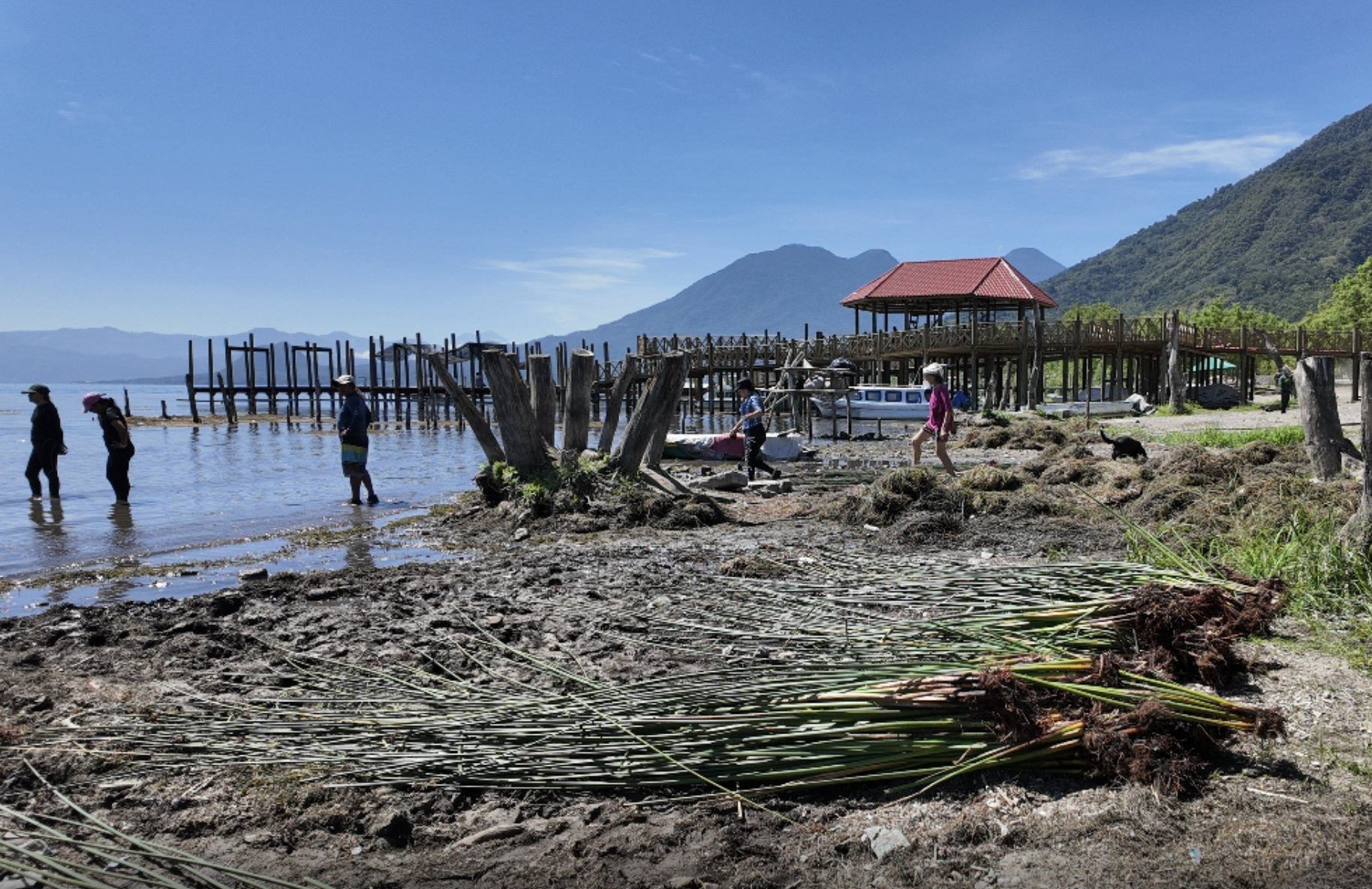
Since then we’ve organised two Community Impact Days, and they have honestly exceeded every expectation I had. People have travelled from Guatemala City, visitors from around the world have spent their Fridays digging swales and planting native reeds, and together we’ve begun transforming an idea on paper into something tangible that people can walk through, touch and participate in.
At the same time, I’ve found myself learning a lesson that no design course ever taught me.
As the project received more attention, some people began to feel that we were taking too much of the credit. Others felt we were thanking the wrong organisations. Others questioned our intentions entirely. Alongside hundreds of encouraging messages from people who wanted to volunteer, donate or simply tell us to keep going, there were also some deeply personal criticisms.
If I’m honest, they affected me more than I expected.
There were moments over the past couple of weeks when I came surprisingly close to throwing in the towel, not because I stopped believing in the project, but because I underestimated how exhausting it can be to stand in the middle of decades of mistrust, competing narratives and old wounds that have very little to do with you personally, yet somehow still become yours to navigate.
Thankfully, those moments were outweighed by something else.
Some of the kindest messages I received came from people I have never even met. Others came from friends and mentors whose opinions I value enormously. Those conversations reminded me why we started this in the first place.
Because the more I reflect on everything that’s happened, the more convinced I become that the real project isn’t restoring a beach.
The real project is restoring trust.
Technically, I suspect I could make tomorrow’s meeting much easier if I walked in with enough money to fund the entire project myself. Many of the immediate problems would probably disappear.
But I also think we’d be reinforcing exactly the pattern that needs to change.
I don’t want this to become another story where someone arrives with a cheque and fixes a problem for a community.
Instead I see something different. I see a community discovering what it is capable of achieving by working together.
I see local children planting reeds alongside municipal workers. I see visitors working beside families from San Pedro. I see people from Guatemala City, foreigners who now call this lake home and the indigenous communities who have cared for this place for generations to look at one another not as competing groups, but as partners in the same story.
That doesn’t happen because somebody writes a cheque.
It happens because people decide that building trust is just as important as building swales.
Tomorrow I’ll walk back into the mayor’s office.
I honestly don’t know how the meeting will go.
What I hope to propose is that before we ask anyone in the world for a single donation, we first finish the earthworks together using the resources we already have. Once we’ve shown that we can collaborate, once we’ve created something that people can see with their own eyes, then our first fundraising campaign can help us build the drainage structures that divert polluted runoff into the new ecological filtration system instead of directly into the lake.
By then, people won’t be investing in a drawing.
They’ll be investing in a movement that has already begun.
That’s the biggest lesson this experience has taught me.
Saving Lake Atitlán (and the world), isn’t primarily an engineering challenge.
It’s a human one.
And if we can learn how to bridge the mistrust that has grown between communities, institutions and cultures over many years, I honestly believe that restoring the lake will be the easier part.
I’m praying for a miracle, all I ask is that you pray with me.
Neal