
Bitcoin and Permaculture: A Path to Abundance and Resilience
Dec 05, 2024
Introduction
Why Permaculture and Bitcoin?
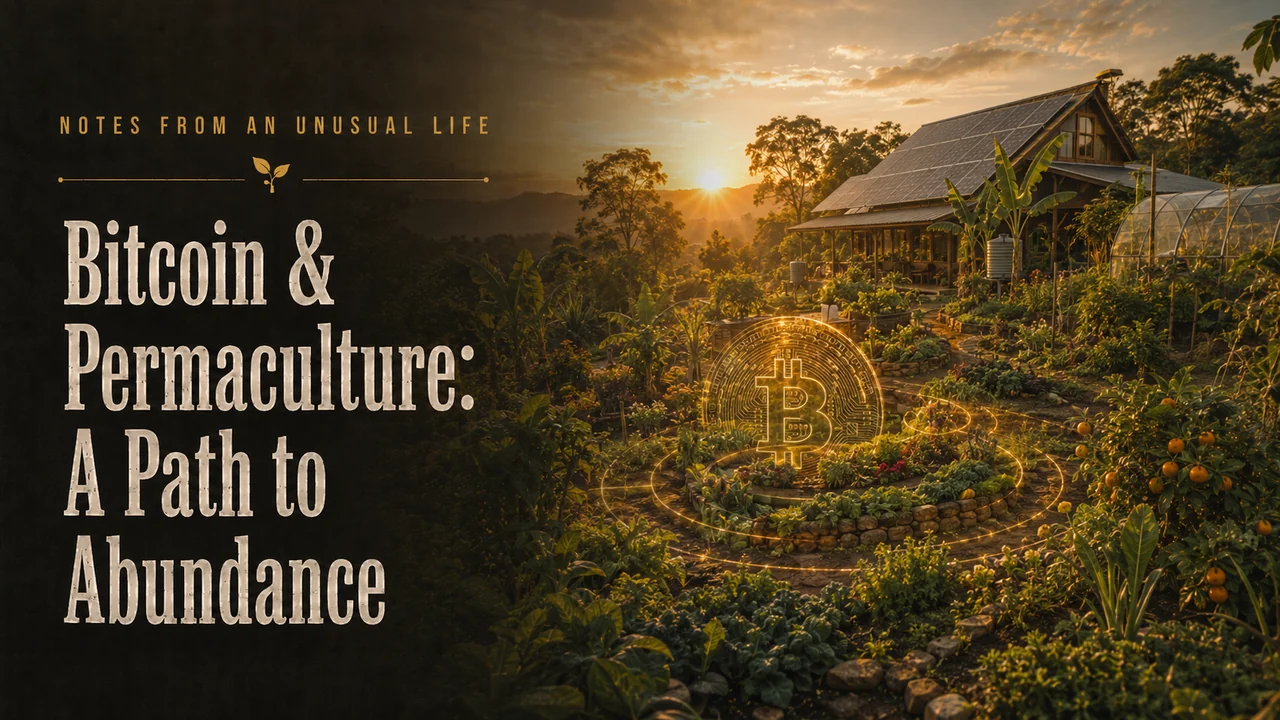
Why would someone like me, deeply rooted in permaculture, regenerative design, and growing food, care about Bitcoin? At first glance, it might seem strange. After all, permaculture is about working with nature, and Bitcoin—a digital technology—might feel worlds apart.
But when we step back, the connection becomes clear. If we are truly going to build a world of abundance—one where people thrive in harmony with nature—we must look beyond the soil. Abundance isn’t just about growing food. It’s about financial sovereignty, too.
Permaculture gives us the tools to feed ourselves and regenerate our communities. Bitcoin offers a way to store the time and energy we invest in those efforts. Together, they form a system where humans can live freely, securely, and abundantly.
What Is Money?
Money has existed since the dawn of human civilization. At its core, money is simply a way to store value—our time, energy, and creativity. But what makes a good currency? To answer this, let’s take a step back in time.
Imagine two hunter-gatherer tribes. One has access to plentiful game; the other doesn’t. Winter is coming, and they have two options: fight over resources or trade. The tribe with the surplus could attack and take what they need—or they could create something valuable, like a sculpture, to exchange for food.
That sculpture represents time and effort—a physical manifestation of stored energy. And by trading it, they avoid conflict and build a mutually beneficial relationship. This is the essence of currency: a way to store creativity, time, and energy in a form that can be exchanged later.
Over time, humans have used many things as money—beads, shells, metals. But all effective currencies share certain traits.
What Makes a Good Currency?
A good currency must:
Represent Actual Energy: It must require effort to produce.
Be Scarce: Limited availability ensures its value.
Be Non-Perishable: It must last over time.
Be Transferable: Easy to exchange between people.
Inspire Collective Belief: People must agree it has value.
Take the Mayans, for example. They used cacao seeds as currency. These seeds were scarce, required energy to grow, and could be dried for long-term storage. The Mayans even bred heirloom varieties of white cacao, much like today’s denominations of $1 and $100 bills. The rarest seeds held the highest value, and their cultivation was an art in itself.
These principles aren’t new. They’ve guided human trade and cooperation for centuries. But in the modern world, something changed.
The Shift to Fiat Currency
For much of history, money was tied to gold—a material that perfectly fits the criteria of a good currency. Gold is non-perishable, easy to store and transport, and requires significant effort to mine. Its scarcity ensured its value, and people trusted it implicitly.
But in the 20th century, political leaders decided to break this link. They moved away from the gold standard, creating fiat currencies that could be printed at will. This shift was justified as a way to stimulate economies and support social welfare.
At first glance, this might seem noble—creating money to help the poor or fund public projects. But the reality is more complex.
Inflation, the silent erosion of purchasing power, disproportionately affects those who rely on fiat money. While the cost of everyday goods like bread or milk may rise slowly, asset prices—homes, land, investments—skyrocket.
Today, a blue-collar worker must work far more hours to buy a home than during the gold standard era. The gap between those who own assets and those who don’t grows wider, perpetuating inequality.
Bitcoin: A Return to Natural Principles
This is where Bitcoin enters the story. Many misunderstand Bitcoin, seeing its energy-intensive mining process as wasteful. But this critique misses the point.
Bitcoin’s energy requirement is not a flaw; it’s a feature. Just like gold, Bitcoin represents stored energy. Mining it requires real effort—proof of work—which ensures its value.
Bitcoin also has a fixed supply: 21 million coins. No more, no less. This makes it inflation-proof, immune to the manipulation that plagues fiat currencies.
And while fiat money depends on centralized control, Bitcoin operates on a decentralized network. No single entity can alter its rules or inflate its supply. It is a currency designed to mirror the balance and fairness we see in nature.
Bitcoin and Renewable Energy: A Perfect Pairing
Critics often highlight Bitcoin’s energy use, but few consider its potential to revolutionize renewable energy.
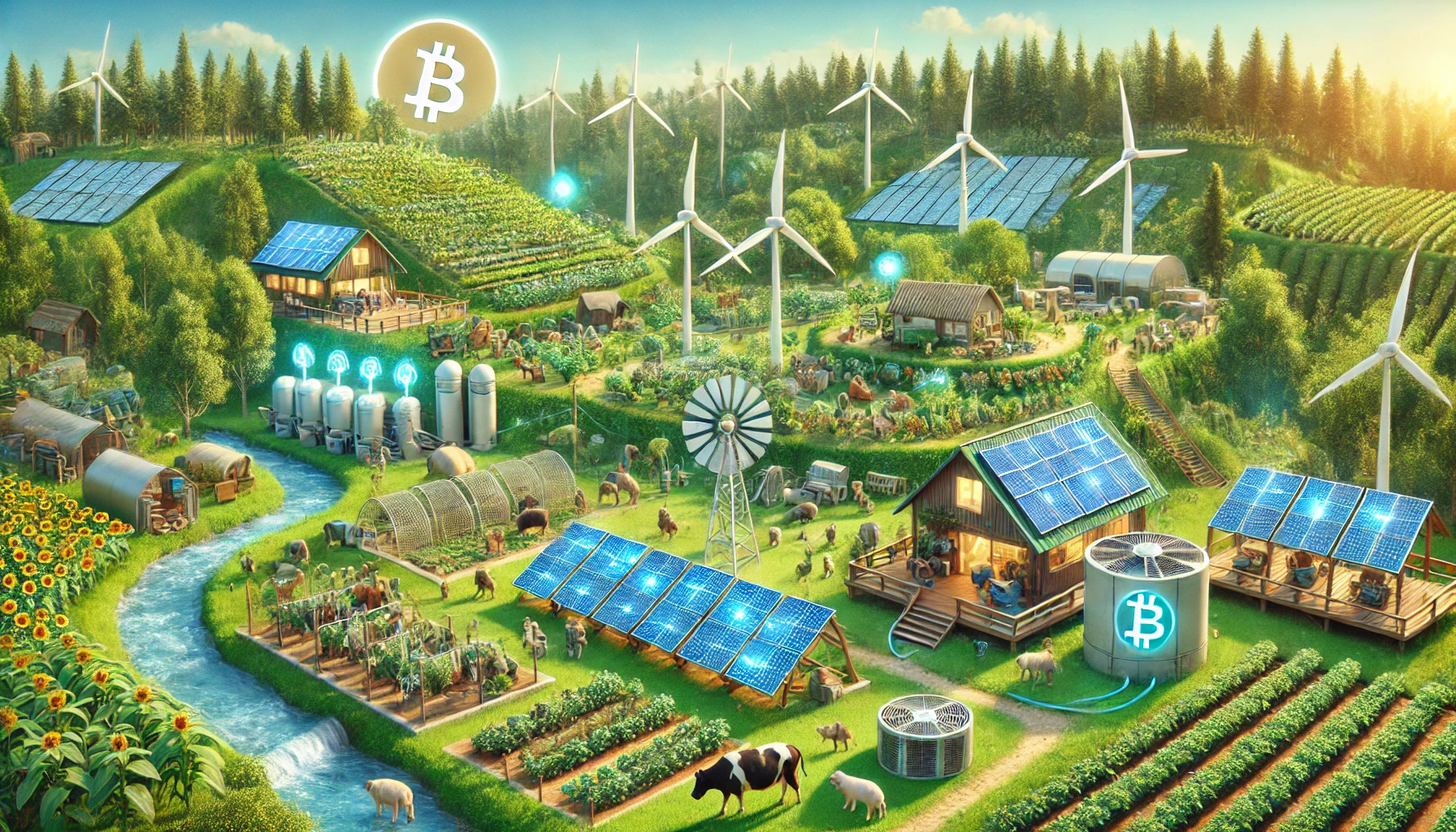
In many remote areas, renewable energy sources like waterfalls, rivers, and solar farms go underutilized because there’s no way to store the excess energy. Bitcoin offers a solution. By using this surplus energy to power mining servers, communities can turn otherwise stranded resources into value.
Imagine a permaculture community generating its own energy through solar, wind, or hydro. Any excess energy could be used to mine Bitcoin, creating a sustainable way to store wealth.
A Vision for the Future
I envision a future where independent communities thrive—where permaculture design meets financial sovereignty. In these communities, people grow their own food, generate their own energy, and store their time and effort in Bitcoin.
This is a world where abundance isn’t just a dream; it’s a reality. A world where the ecological crisis and the social crisis are addressed together, where people break free from the chains of inflation and debt.
Bitcoin and permaculture aren’t just tools; they’re philosophies. They remind us that true wealth comes from balance—whether in the soil, in our systems, or in our currencies.
Conclusion
The stories we tell ourselves shape the world we create. Just as permaculture teaches us to work with nature, Bitcoin offers a way to align our financial systems with natural principles. Together, they give us the tools to build a future of resilience, abundance, and freedom.
What do you think? Let’s advance this conversation and shatter the myths surrounding Bitcoin and permaculture. Reply to this newsletter or join the discussion. The future is ours to create.